Imagine you’re about to send money to a friend. You open your banking app, type in the amount, hit send… and then you wait. And wait. And wait. The bank says it could take 1 – 3 business days to process. Meanwhile, they charge you a fee for moving your own money.
Now, picture an alternative: You send the same amount, but this time, it arrives instantly, costs just a few cents in fees, and no middleman gets a cut. That’s the kind of efficiency blockchain technology enables.
You’ve probably heard blockchain described as the technology behind Bitcoin, but it’s so much more than that. It’s the foundation of Ethereum, DeFi, Web3, NFTs, and even AI-powered finance. But how does it actually work, and why does it matter? Let’s break it down.
How Blockchain Works: The Basics
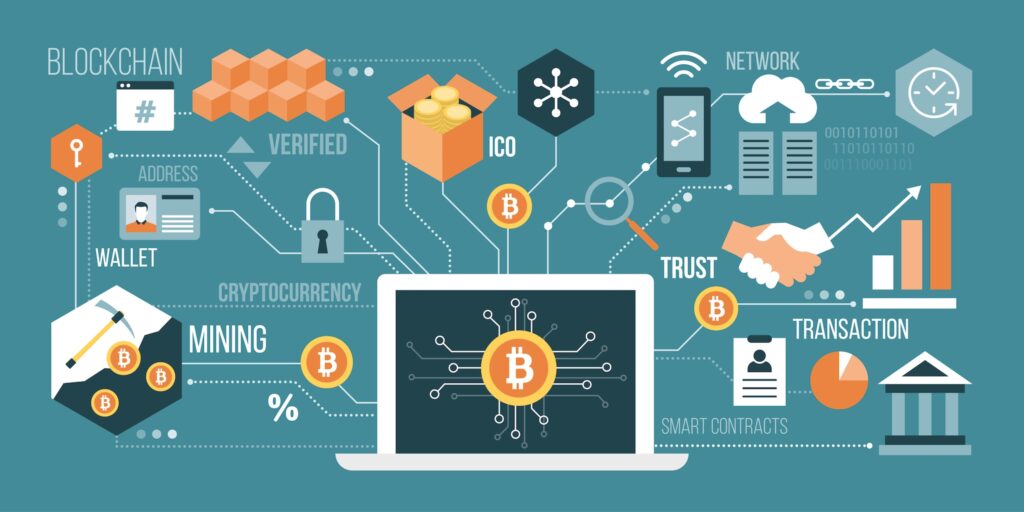
At its core, blockchain is a digital ledger – a fancy term for a record-keeping system. But unlike traditional databases that are controlled by a single authority (like a bank or corporation), a blockchain is decentralized – meaning no single entity has control.
The Key Features of Blockchain:
- Decentralization – Instead of being stored in one central location, blockchain records are distributed across thousands of computers, making them immune to manipulation.
- Immutability – Once a transaction is recorded, it can’t be changed or deleted, ensuring security and trust.
- Transparency – Every transaction is publicly viewable, eliminating the need for blind trust in third parties.
Think of it like a Google Doc that multiple people can view and edit simultaneously. Instead of relying on one person to update the document, everyone can see changes in real time, and no one can secretly alter past records.
Now, let’s see how Bitcoin and Ethereum use blockchain in different ways.
Bitcoin: The First Blockchain Use Case
Bitcoin was the first real-world application of blockchain technology1. Created in 2008, it introduced a financial system with no banks, no government oversight, and no middlemen.
How It Works:
- Every 10 minutes, Bitcoin’s blockchain records a new set of transactions.
- A network of miners competes to verify transactions by solving complex math problems.
- The miner who solves it first earns Bitcoin as a reward.
Bitcoin’s blockchain is built for security and stability, which is why it’s often referred to as “digital gold.” But it has one main function: being a store of value and a means of payment.
What if blockchain could do more than just transfer money? That’s where Ethereum comes in.
Ethereum: A Blockchain That Thinks for Itself
Ethereum took the core idea of blockchain and supercharged it. Instead of just recording transactions, Ethereum allows developers to build applications directly on the blockchain—this means programs that run automatically, without middlemen or human interference.
Why Ethereum is Different from Bitcoin:
- Smart Contracts – Self-executing programs that automatically complete transactions when conditions are met. Imagine buying a house without needing a lawyer or escrow company.
- Decentralized Applications (dApps) – Apps built on blockchain instead of centralized servers, meaning no single company can shut them down.
- NFTs (Non-Fungible Tokens) – Unique digital assets that verify ownership of items like art, music, and even real estate.
Ethereum powers Web3, the vision of an internet where users control their own data, finances, and digital identity instead of big tech companies.
But blockchain isn’t just about cryptocurrency anymore. It’s revolutionising entire industries.
Beyond Bitcoin & Ethereum: How Blockchain is Changing the World
Blockchain is disrupting more than just finance, it’s transforming industries you wouldn’t expect:
- Supply Chains – Companies like Walmart and IBM use blockchain to track products from source to shelf, preventing fraud and contamination2.
- Healthcare – Medical records stored on the blockchain can’t be altered or lost, making data more secure and accessible to patients.
- AI & Data Ownership – Blockchain is helping create decentralized AI models where data isn’t owned by corporations but by individuals.
Even governments and banks, the very institutions blockchain was meant to challenge – are starting to adopt it because they know they can’t afford to be left behind.
The Bottom Line
Blockchain isn’t just a trend, it’s a shift in how we handle trust, ownership, and transactions.
It removes middlemen, eliminates unnecessary fees, and gives power back to individuals. Whether you’re interested in crypto, finance, or just technology in general, understanding blockchain isn’t optional anymore, it’s essential.
So, the real question is: are you paying attention?
Footnotes
- Bitcoin. “White paper”, https://bitcoin.org/bitcoin.pdf ↩︎
- IBM. “Blockchain supply chain” https://www.ibm.com/blockchain-supply-chain ↩︎